 admin
adminWhat if construction sites no longer required hundreds of workers to manually complete projects? What if machines could work tirelessly, executing tasks with precision and speed that far surpass human capability? These scenarios are no longer distant dreams but active transformations reshaping the construction industry.
AI (artificial intelligence) and robotics have emerged as game-changers in a sector traditionally reliant on human labor and heavy machinery. These technologies are driving faster, safer, and more cost-effective construction practices. From reducing labor costs to accelerating project timelines, intelligent automation is not just a trend but a necessity in meeting the growing global demand for infrastructure.
In this comprehensive exploration, we’ll examine the role of AI and robotics in construction, their technological underpinnings, and the benefits they bring. Let’s dive into the future of construction.
The construction industry faces persistent challenges, including labor shortages, safety risks, and inefficiencies. AI and robotics offer solutions to these issues by automating repetitive and hazardous tasks, reducing reliance on manual labor, and increasing project precision.
Example: A project that once required a team of 20 workers over two weeks can now be completed by a robotic system in half the time with fewer resources.
Enhancing Safety Standards
Construction remains one of the most dangerous industries worldwide. Workers face risks like falls, heavy machinery accidents, and exposure to hazardous materials. AI-powered robots reduce these risks by handling dangerous tasks, ensuring that workers stay safe while focusing on creative and problem-solving roles.
Comparison: Traditional site inspections often place workers in precarious positions, whereas AI-driven drones can perform these inspections safely and efficiently.
Boosting Productivity and Reducing Costs
Automation significantly improves productivity by enabling machines to operate continuously without breaks. This reduces project timelines and labor costs, while advanced AI algorithms optimize resource usage to minimize waste and improve cost efficiency.
Case Study: A construction company reduced project costs by 30% after adopting AI-based project planning tools that streamlined material procurement and workforce scheduling.
The Role of AI in Construction Equipment
Intelligent Automation: The Brain Behind the Machines
AI powers many of the advanced capabilities seen in modern construction equipment. These systems analyze vast amounts of data, learn from past experiences, and make real-time decisions, enabling machines to perform tasks autonomously and adaptively.
Autonomous Vehicles and Equipment
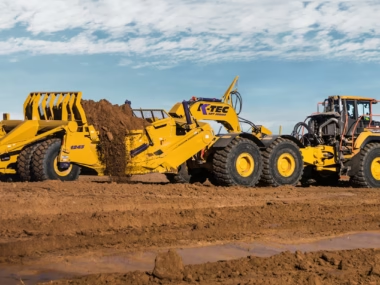
Self-driving construction vehicles, such as bulldozers, excavators, and dump trucks, are now commonplace on advanced construction sites. These machines use AI to navigate complex environments, avoid obstacles, and perform tasks like excavation and material transport without human intervention.
Example: Autonomous excavators adjust their digging depth based on real-time data about soil conditions, ensuring precision and efficiency.
AI-Driven Planning and Design
AI is transforming the pre-construction phase by offering advanced planning and design tools. Machine learning algorithms analyze project parameters, predict potential challenges, and generate optimized blueprints that reduce errors and inefficiencies during execution.
Robotics in Construction: Physical Precision
Specialized Robots for Key Tasks
Robotics introduces physical automation, enabling machines to perform repetitive and precise tasks with unmatched accuracy.
Robotic Bricklaying
Robotic bricklayers, like SAM (Semi-Automated Mason), can lay bricks faster and more consistently than human workers. They use sensors and cameras to adjust for minor inconsistencies in materials or surface levels, ensuring flawless results.
Comparison: A human bricklayer averages 500 bricks per day, while SAM lays over 3,000 bricks daily with greater precision.
Robotic Welding and Assembly
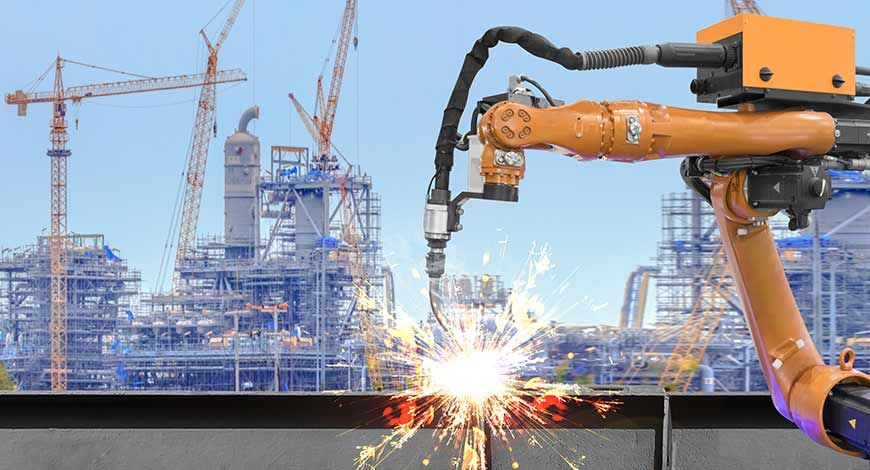
Construction robots are also revolutionizing structural assembly. Robotic welders can join metal components with micrometer accuracy, enhancing structural integrity and reducing the risk of human error.
Concrete Pouring and Finishing
Robots equipped with advanced systems can pour and smooth concrete efficiently, ensuring consistent finishes. This not only saves time but also improves the durability of the structure.
Key Benefits of AI and Robotics in Construction
Increased Speed and Efficiency
AI and robotics accelerate project timelines by performing tasks faster and more reliably than human workers. These technologies also allow for round-the-clock operations, minimizing delays and maximizing output.
Example: An AI-powered construction site completed a six-month project in just four months by leveraging autonomous machines and predictive analytics.
Enhanced Safety
Automation removes workers from dangerous environments, significantly reducing accidents. Robots and AI systems can also predict potential hazards using real-time data, allowing site managers to implement proactive safety measures.
Testimonial: “Introducing robotics for hazardous tasks reduced our onsite accidents by 40% within the first year.” – Safety Manager, Global Construction Firm
Improved Quality and Precision
Robots and AI-driven equipment produce consistent, high-quality results by eliminating human error. Whether it’s precision welding or optimal material placement, the technology ensures every task meets exact specifications.
Technological Innovations Driving Change
AI-Powered Drones
Drones equipped with AI are becoming indispensable tools for surveying and monitoring construction sites. They capture aerial imagery and generate 3D maps, providing valuable insights that guide decision-making and progress tracking.
Use Case: A construction company used drones to monitor site progress daily, identifying delays early and staying ahead of schedule.
IoT-Enabled Smart Equipment
The Internet of Things (IoT) connects construction machinery, sensors, and software, creating an ecosystem of smart equipment. These interconnected devices share real-time data, enabling seamless communication and coordination across the site.
Future Trends: The Evolution of Construction Technology
Robotic 3D Printing
Robotic 3D printers are revolutionizing the construction of buildings and infrastructure. These printers can create complex structures quickly and with minimal waste, paving the way for affordable and sustainable housing solutions.
Case Study: A company 3D-printed a two-story home in just 48 hours, showcasing the potential of this technology.
Smart Construction Sites
The integration of AI, robotics, and IoT will create “smart” construction sites where every aspect of the project is monitored and optimized. These sites will feature real-time tracking, predictive maintenance, and automated workflows, making construction more efficient than ever.
Collaborative Robotics
The future will see greater collaboration between human workers and robots. While robots handle repetitive or hazardous tasks, humans will focus on creative and strategic work, enhancing overall productivity and innovation.
FAQs About AI and Robotics in Construction
Q: Are robots replacing human workers?
A: No, robots complement human workers by automating repetitive and hazardous tasks, allowing humans to focus on higher-value activities like planning and problem-solving.
Q: What is the cost of adopting AI and robotics in construction?
A: While initial investments may be high, the long-term savings from increased efficiency, reduced labor costs, and minimized errors often outweigh the upfront costs.
Q: How does AI improve sustainability in construction?
A: AI optimizes resource usage, minimizes waste, and helps design energy-efficient buildings, reducing the environmental impact of construction projects.
Building the Future with AI and Robotics
AI and robotics are revolutionizing construction, offering unprecedented levels of efficiency, safety, and sustainability. These technologies address long-standing challenges, enabling the industry to meet the growing demand for infrastructure while minimizing costs and risks.
As advancements continue, the construction industry will witness further integration of AI, robotics, and smart systems, creating a future where buildings rise faster, safer, and more sustainably than ever before. The revolution is just beginning, and the possibilities are endless.


 admin
admin