 admin
adminWhen designing or assessing the strength of steel beams in high-rise buildings, engineers face a critical responsibility: ensuring that these beams can safely carry the loads placed upon them. Steel beams are essential structural elements that support the weight of floors, roofs, and all the contents within the building. Their load-bearing capacity plays a vital role in the overall safety, stability, and longevity of the structure. In this article, we explore how to calculate the load-bearing capacity of steel beams, breaking down the process into detailed subtopics that will benefit both experienced engineers and novices alike.
Understanding the Load Types and Their Impact on Steel Beams
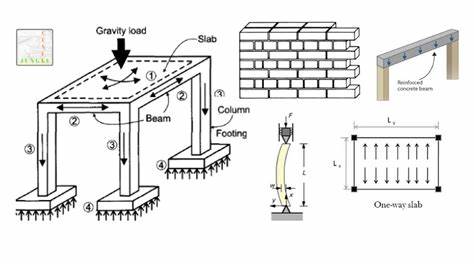
Before diving into calculations, it’s essential to first understand the types of loads that will act on steel beams in high-rise buildings. Loads can be divided into two broad categories: dead loads and live loads.
Dead loads consist of the weight of the structure itself, including the beams, floors, walls, and other permanent fixtures. These are static loads that do not change over time and remain constant throughout the lifespan of the building. Live loads, conversely, are dynamic and can vary depending on occupancy, furniture, equipment, or even environmental factors such as wind, snow, or seismic activity. Both types of loads need to be accounted for when determining the load-bearing capacity of steel beams, as they each exert different stresses on the beam.
Understanding how these loads will be distributed across the beam helps engineers anticipate the maximum forces that the beam must endure. This knowledge is crucial to designing a beam that can withstand both everyday usage and unexpected extreme events.
Key Factors Affecting the Load-Bearing Capacity of Steel Beams
The calculation of a steel beam’s load-bearing capacity is not a straightforward task. Several critical factors must be considered to ensure an accurate and safe result. These factors include the beam’s material properties, its dimensions, its span, and the types of forces acting on it.
Material Properties and Steel Grades
The material of the steel beam plays a significant role in its ability to carry loads. The strength of the steel is determined by its grade, which is a measure of its yield strength and tensile strength. Steel grades such as ASTM A36, A992, and others are commonly used in construction, each with varying levels of strength. Understanding the steel’s properties helps determine how much stress the material can handle before failure. Typically, engineers use the yield strength of the steel as a baseline to ensure that the stress placed on the beam does not exceed this threshold, thereby avoiding material failure.
Beam Dimensions and Profile
The size and shape of the beam directly affect its ability to resist bending and shear forces. Steel beams come in various profiles, including I-beams, H-beams, and T-beams, with each offering different advantages based on the specific needs of the building. For example, an I-beam is often used in high-rise buildings because its shape allows for greater strength while minimizing weight.
The dimensions of the beam, including its width, thickness, and depth, are essential when calculating the load-bearing capacity. For instance, a thicker beam will have a greater resistance to bending, but it will also be heavier. Therefore, engineers must carefully balance the beam’s size with the expected loads it will carry.
Load-Bearing Capacity Calculation: The Step-by-Step Process
Once the essential parameters are established, the load-bearing capacity of the steel beam can be calculated using fundamental engineering principles. Below is an overview of the key steps involved in this process.
Moment of Inertia and Section Modulus
Two primary structural properties—moment of inertia (I) and section modulus (S)—are used to calculate the bending stress and determine a beam’s ability to resist bending. The moment of inertia measures the distribution of the beam’s cross-sectional area relative to its neutral axis. This value plays a key role in understanding how the beam will respond to bending forces.
The section modulus, on the other hand, is a geometric property that indicates how much stress a beam can endure before failure. It is calculated by dividing the moment of inertia by the distance from the neutral axis to the furthest point of the beam’s section.
Bending Stress Calculation
The bending stress is determined by dividing the bending moment (M) by the section modulus (S). The formula for bending stress is:

Once the bending stress is calculated, it is compared to the allowable stress for the material. If the calculated stress exceeds the allowable stress, the beam is not sufficient to carry the load, and adjustments to the beam’s dimensions, material, or design will be necessary.
Deflection Considerations
While calculating the bending stress is critical, it is also important to evaluate the beam’s deflection under load. Excessive deflection can cause problems such as damage to the building’s interior or cause discomfort for occupants. Engineers use the following formula to calculate deflection:

The deflection must be within acceptable limits, usually defined by local building codes or engineering standards, to ensure the beam’s performance under load.
Connection Strength and Load Transfer
In addition to the beam’s physical properties, engineers must also consider the strength of the connections that link the beam to other structural elements, such as columns and walls. The strength of these connections is critical because they must transfer the applied loads safely and effectively from the beam to the rest of the structure. If the connections fail, the entire beam’s load-bearing capacity could be compromised.
Engineers must design connections that can withstand the applied shear and tensile forces, ensuring they remain intact even under extreme loading conditions. The type of connection—whether welded, bolted, or riveted—affects how the load is distributed throughout the structure.
Final Considerations and Safety Factors
Lastly, engineers apply safety factors to their calculations to account for uncertainties, such as variations in material properties, construction defects, or unforeseen loads. The safety factor typically ranges from 1.5 to 2.0, depending on the type of building and its intended use. This ensures that the beam can safely support unexpected forces and provides a margin of safety for the occupants.
The Importance of Accurate Load-Bearing Capacity Calculations
In high-rise buildings, the load-bearing capacity of steel beams is fundamental to the safety and stability of the entire structure. By carefully considering load types, material properties, beam dimensions, and connection strength, engineers can calculate the load-bearing capacity of steel beams with a high degree of accuracy. This process ensures that the building can withstand both routine and extreme loads, protecting occupants and the integrity of the structure. Whether you’re a seasoned engineer or a newcomer to the field, mastering these calculations is essential to creating safe, long-lasting, and efficient high-rise buildings.


 admin
admin