 admin
adminThe world of engineering, procurement, construction, and installation (EPCI) is evolving rapidly, and one of the biggest shifts in the industry is the growing reliance on predictive maintenance technologies. For engineers in the field, unplanned equipment failures are among the most frustrating and costly setbacks. Delays, cost overruns, safety risks, and project disruptions often stem from machinery breaking down unexpectedly. But what if you could see potential failures before they happen? What if you could predict and prevent these breakdowns with precise accuracy? That is where predictive maintenance tools come in, and in 2025, they are more advanced, intelligent, and indispensable than ever before.
Predictive maintenance tools are designed to monitor equipment in real time, analyze data patterns, and forecast potential failures before they occur. Unlike traditional maintenance strategies—such as reactive maintenance, where engineers fix problems after they arise, or scheduled maintenance, where servicing is performed at predetermined intervals regardless of actual equipment health—predictive maintenance optimizes the entire process by using artificial intelligence, IoT sensors, big data analytics, and machine learning to detect anomalies and predict failures. The result? Reduced downtime, increased efficiency, cost savings, and enhanced safety.
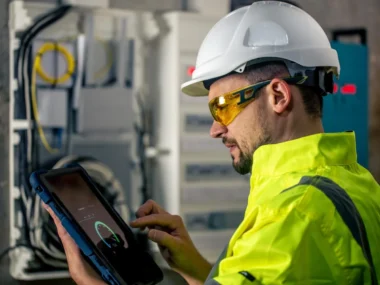
One of the most powerful predictive maintenance technologies making waves in 2025 is AI-driven condition monitoring systems. These systems rely on smart sensors placed on critical machinery to collect real-time operational data, including temperature, pressure, vibration, and acoustic emissions. By feeding this data into sophisticated machine-learning algorithms, engineers can detect even the slightest deviations from normal operating conditions, signaling the early stages of wear and tear or mechanical issues. This not only allows for proactive maintenance but also extends the lifespan of equipment by ensuring timely interventions before minor issues escalate into full-blown failures.
Another game-changer in predictive maintenance is digital twin technology. Digital twins are virtual replicas of physical assets, allowing engineers to simulate, test, and monitor machinery performance in a completely digital environment. These virtual models continuously sync with real-world equipment using IoT sensors, providing engineers with deep insights into performance trends and failure probabilities. By leveraging digital twins, EPCI professionals can run simulations to assess different maintenance strategies, identify potential vulnerabilities, and optimize performance without disrupting operations. This means maintenance can be scheduled precisely when needed, reducing unnecessary shutdowns and maximizing efficiency.
Advanced vibration analysis tools are also proving to be invaluable in predictive maintenance. Engineers have long relied on vibration analysis to detect misalignment, unbalanced components, or early signs of bearing failure, but recent advancements have taken this to a whole new level. With high-precision accelerometers and AI-powered diagnostic software, vibration monitoring systems can now detect microscopic changes in machine behavior long before a failure becomes evident. This technology is particularly crucial in industries that rely on rotating equipment, such as oil and gas, power plants, and heavy manufacturing, where a single failure can lead to catastrophic consequences.
Cloud-based predictive maintenance platforms are transforming how engineers access and utilize maintenance insights. These platforms integrate multiple data sources—from sensors, historical maintenance records, weather conditions, and even external factors like supply chain disruptions—to provide engineers with a holistic view of asset health. With real-time alerts, remote monitoring capabilities, and predictive analytics powered by artificial intelligence, cloud-based systems enable engineers and project managers to make data-driven decisions regardless of their location. This is especially useful in large-scale EPCI projects where teams are spread across different sites and need centralized access to critical maintenance data.
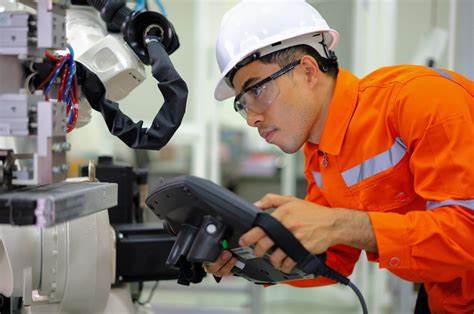
The rise of drone-based and robotic predictive maintenance tools is another trend engineers can no longer ignore. In industries where manual inspections are time-consuming, expensive, and even hazardous, drones and robotic systems equipped with high-resolution cameras, infrared sensors, and AI-driven analytics are now being deployed to monitor infrastructure health. Pipelines, offshore platforms, high-rise structures, and power transmission lines can now be inspected without human intervention, reducing risks while improving efficiency. These autonomous systems can detect corrosion, leaks, and structural weaknesses with extreme accuracy, allowing engineers to prioritize maintenance efforts where they are needed most.
With all these advancements, it is evident that predictive maintenance tools in 2025 are not just about preventing breakdowns—they are about transforming engineering into a data-driven, proactive, and highly efficient discipline. The integration of AI, IoT, digital twins, and cloud computing is creating a new era of reliability, where engineers are empowered with real-time insights to make informed decisions. The benefits are enormous: reduced maintenance costs, minimized unplanned downtime, improved safety, and enhanced productivity.
For EPCI professionals, project managers, and industry stakeholders, the adoption of these predictive maintenance technologies is no longer optional; it is a necessity to stay competitive in an increasingly complex and demanding engineering landscape. Engineers who embrace these tools will not only prevent costly failures but also position themselves at the forefront of an industry revolution that prioritizes intelligence, efficiency, and precision.

 admin
admin